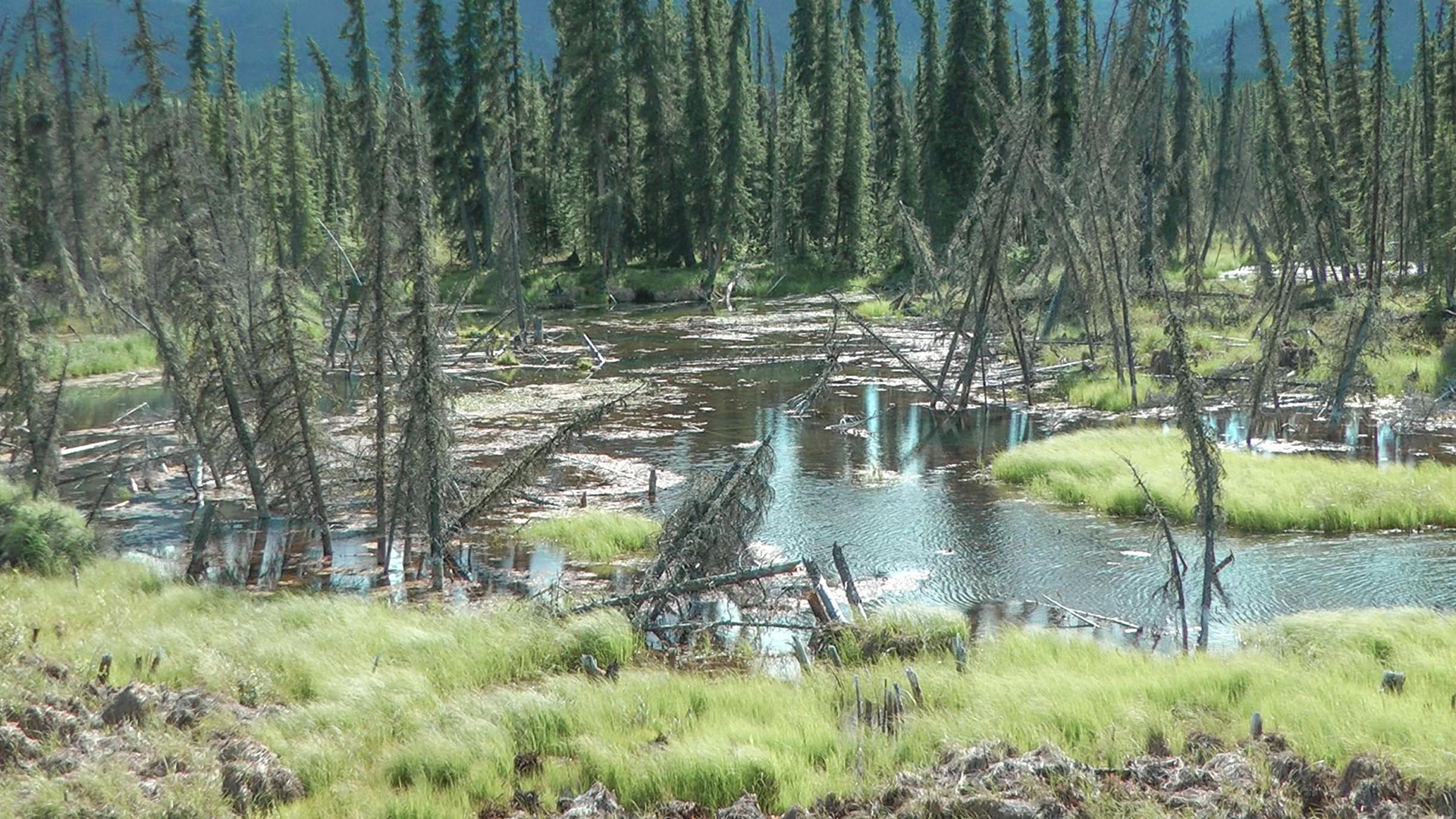
Image: permafrost thaw in Southeast Alaska
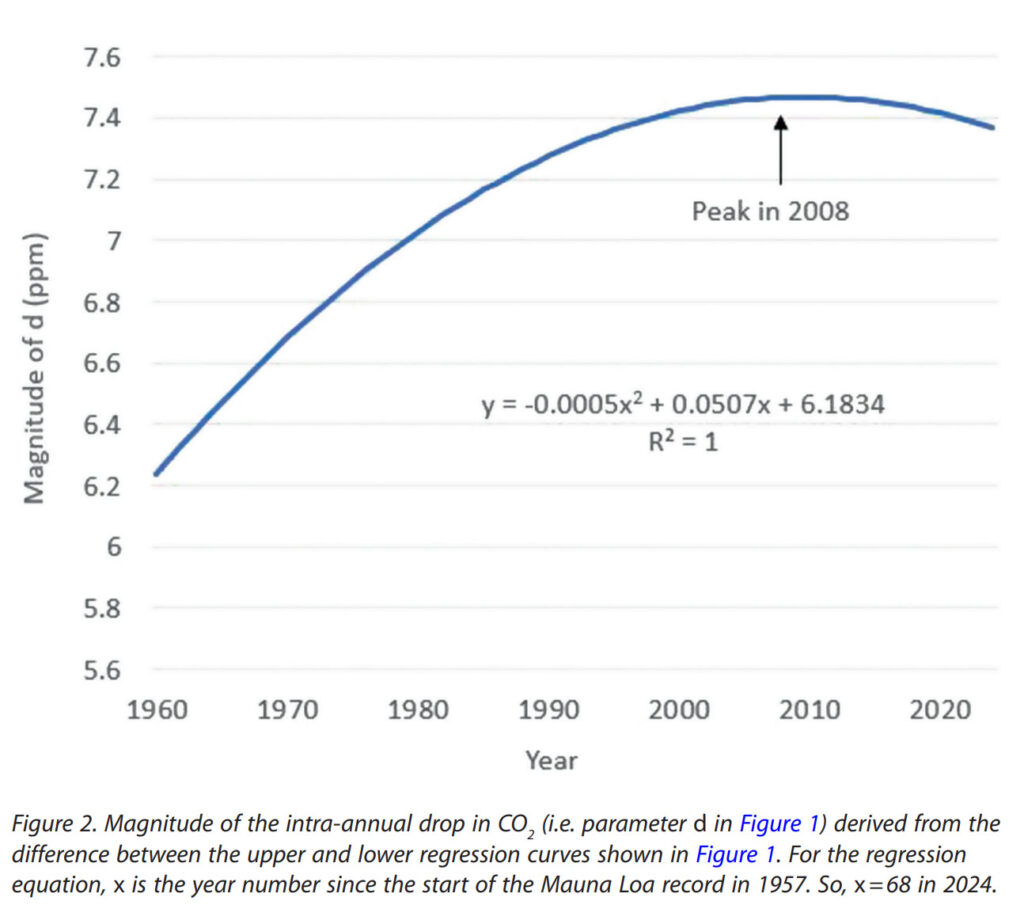
At some point in the future, our climate culture has suggested that effects of warming will become so influencing on Earth’s carbon balance that our natural sinks will slow and possibly reverse. This point has likely now passed reports Curran and Curran 2025 in the journal of the Royal Meteorological Society. This threshold passing or tipping activation has been caused by degradation of Earth’s systems that absorb greenhouse gases. Warming, drying and other effects of a warming climate have caused Earth systems’ degrading factors to markedly increase and in some places like the Amazon, a flip from sequestration to emissions has already been documented some 80 years ahead of projections. This work suggest these effects are increasing across the planet with a resulting 20 percent decline in natural sequestration since 2008 that is equal to, up to a 37 percent increase in annual atmospheric CO2 concentration.
Selected quotes…
“Atmospheric CO2 concentration will now rise more rapidly than previously in proportion to annual global CO2 emissions. In simple terms, the current rate of increase of atmospheric CO2 of around +2.5ppm per year would have been around +1.9ppm if natural sequestration had not
begun to fail… Another consequence, […] is that anthropogenic emissions will now need to decrease by 0.3% per year, simply to compensate for declining terrestrial sequestration… This is a very significant factor as the relatively stable, long-term, annual increase in emissions of +0.45Gt CO2 is currently equivalent to an increase of about +1.2% per year. From Figure 2, this consequence looks set only to become more serious as sequestration declines increase rapidly… Considering these results, it may seem counter intuitive that a 20% reduction in potential sequestration can drive a 25%– 37% increase in annual increments of atmospheric CO2 concentration. The explanation is that the small residual of the sum of a larger positive term (anthropogenic emissions minus oceanic sequestration) and a larger negative term (terrestrial sequestration) can proportionately be substantially changed by a relatively minor change in either of those two terms.”
Curran and Curran, Natural sequestration of carbon dioxide is in decline – climate change will accelerate, Royal Meteorological Society, March 2025.
https://rmets.onlinelibrary.wiley.com/doi/epdf/10.1002/wea.7668
Cover image: permafrost thaw, Glenn Highway, Alaska, 2018, Bruce Melton
